

Ideas in Motion
Where stories, strategies, and bold innovation power what’s next.
At RevaTerra, we believe progress happens when knowledge moves - when stories, strategies, and innovation flow into action. Ideas in Motion is our space to share what we’re learning, building, and imagining as we accelerate the world’s transition to intelligent energy.
News in Action
Where news releases, milestones, and market developments highlight our growth.
At RevaTerra, we are committed to transparency, accountability, and meaningful progress. News in Action is our space to highlight updates and announcements as we scale intelligent bioenergy solutions and deliver measurable impact in the global transition to clean energy.
Responses to climate change – insights and limitations from herbaceous plant model species
Authors: Nicholas J. Kooyers, Jill T. Anderson, Amy L. Angert, Meghan L. Avolio, Diane R. Campbell, Moises Exposito-Alonso, Thomas E. Juenger, David A. Moeller, Joseph D. Napier, Seema N. Sheth
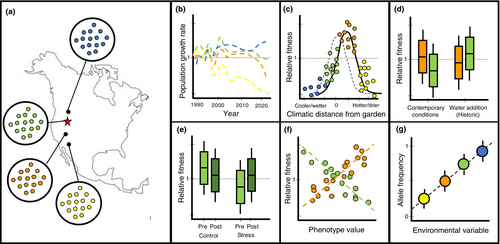
Herbaceous plant species have been the focus of extensive, long-term research into climate change responses, but there has been little effort to synthesize results and predicted outlooks. This primer summarizes research on climate change responses for eight intensively studied herbaceous plant species. We establish generalities across species, examine limitations, and propose a path forward. Climate change has reduced fitness, caused maladaptation, and/or led to population declines in at least part of the range of all six forb species. Plasticity alone is likely not sufficient to allow adjustment to shifting climates. Most model species also have spatially restricted dispersal that may limit genetic and evolutionary rescue. These results are surprising, given that these species are generally widespread, span large elevation ranges, and have substantial genetic and phenotypic variation. The focal species have diverse life histories, reproductive strategies, and habitats, and most are native to North America. Thus, species that are rare, habitat specialists, or endemic to other parts of the world are poorly represented in this review. We encourage researchers to design demographic and field experiments that evaluate plant traits and fitness in contemporary and potential future conditions across the full life cycle, and that consider biotic interactions in climate change responses.